
Deep Work: How to Actually Focus When Your Brain Has Been Trained to Scroll
focus is a muscle and you need to train it as such!!

Last year I went on a business retreat in Austin with a small group of other creators and entrepreneurs, and the way we structured our days completely changed how I think about working. Every morning before we got into our work blocks, we went around the room and each person said out loud exactly what they were going to accomplish that day - and we got SPECIFIC. Not “work on my business” - actual defined tasks with defined outputs. Then we worked in two-hour blocks with phones completely away, no music, no background noise, and intentional rest in between.

I got more done over those three days than I typically get done in two weeks of working at home by myself. And when I came back I kept thinking about why. What was it about that environment that made focus feel almost effortless, when at home it feels like something I’m constantly fighting for?
The Reframe
Most people treat focus like a mood. Something that either shows up each day, or it doesn’t. When you sit down to work, you either feel focused or you don’t, and if you don’t, you wait for it or you give up. And when it doesn’t come, you tell yourself you’re scattered, you have no discipline, you just can’t focus. Feel familiar?
But what I want to emphasize today is that focus isn’t a mood. It’s a skill. And like any skill, it can be built, it can be trained, and it can be actively degraded if you’re not paying attention to what you’re doing to it.
Cal Newport wrote an entire book about this called Deep Work, and it’s one of the books that most changed how I think about my work. His central argument is that the ability to focus deeply on cognitively demanding tasks without distraction is becoming both increasingly rare and increasingly valuable.
Rare because the way we live - constantly connected, constantly stimulated - is systematically destroying our capacity for it. Valuable because the people who can still do it produce work at a level that scattered, distracted work simply cannot compete with.
I think about that constantly. I’ve felt both versions of myself. The scattered version who spends a full day “working” - checking her phone every ten minutes, opening new tabs, never quite landing anywhere - and reaches the end of the day feeling like nothing got done. And the focused version who sits down for two hours with no distractions and accomplishes more than that entire scattered day. The difference isn’t effort. It’s the quality of the attention.
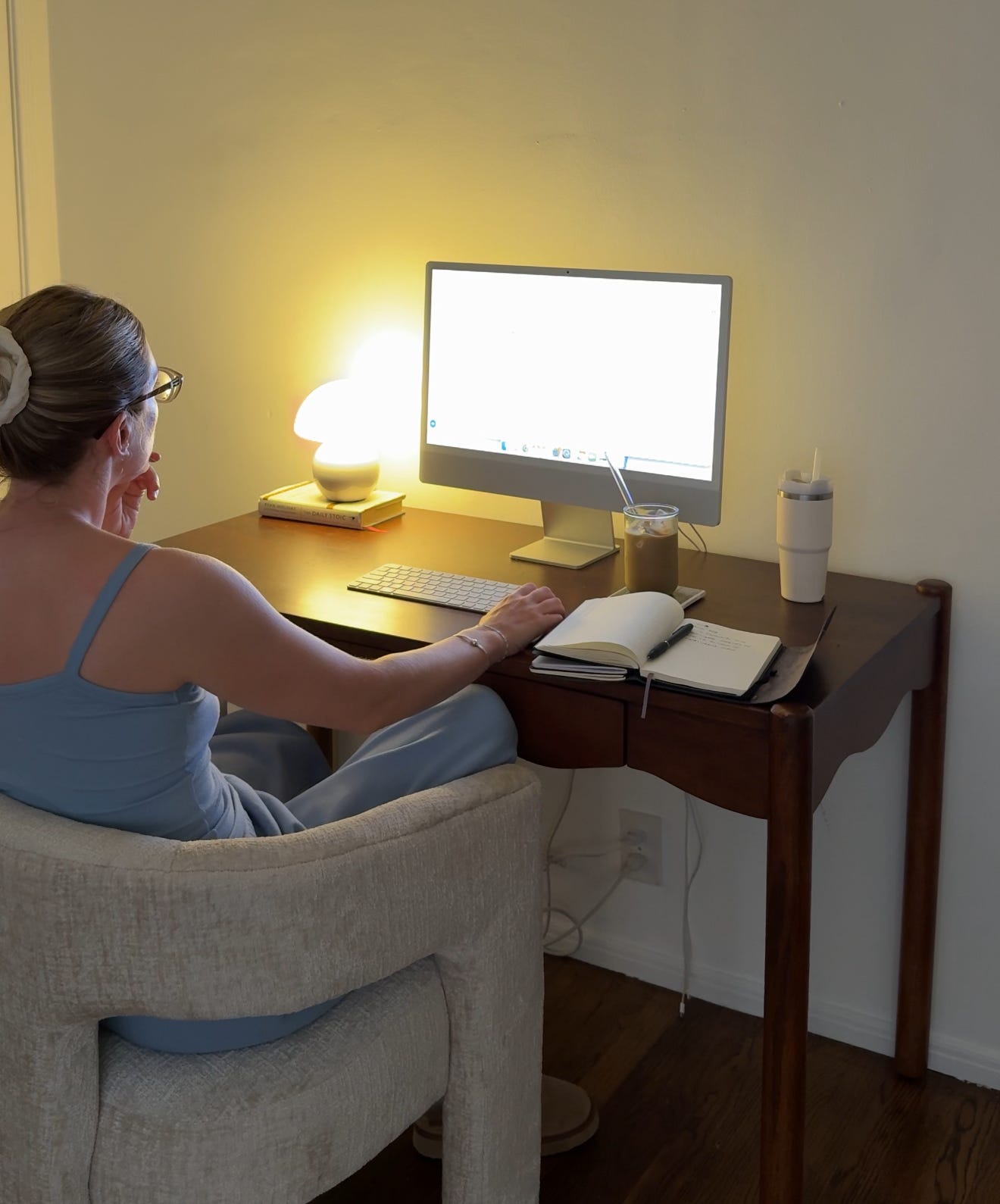
The Four Rules
Newport outlines four rules for building a deep work practice, and I’ve found all of them useful.
Rule 1: Work Deeply. This means building routines and rituals that eliminate the need to rely on willpower. He outlines four philosophies for how to do this: monastic (total isolation, cutting out all shallow obligations), bimodal (splitting your time into defined deep and shallow periods), rhythmic (doing deep work at the same time every day), and journalistic (fitting it in wherever your schedule allows). I work within the bimodal philosophy - scheduled deep work blocks throughout the day with everything else happening outside of them.
Rule 2: Embrace Boredom. If you give your brain constant distraction, like checking your phone every five minutes, or opening a new tab whenever you feel resistance (GUILTY!), you lose the ability to focus and you train your brain to keep doing exactly that. The fix is to schedule your phone use in advance, create defined periods where you’re allowed to check it, and stick to those boundaries. Outside of those windows, you have to let yourself be bored. This is deeply uncomfortable at first. It’s also how your brain learns, grows, and stays actually stimulated rather than just constantly fed.
Rule 3: Quit Social Media (Or At Least Reduce It). Newport’s actual advice is to quit, but I understand that’s not realistic for most people especially if you work in content like I do. The version of this I’ve implemented is being extremely intentional about who I follow and what I let into my feed. I only follow people I know in real life, people who specifically inspire me, or people posting about things I’m actively learning about. I cycle through and unfollow people regularly. The goal is to make your social media consumption feel curated and intentional rather than like an endless scroll of noise.
Rule 4: Drain the Shallows. Shallow work is the logistical, low-value stuff; admin, emails, scheduling, responding to messages. It feels productive because you’re doing something, but it’s not really moving the needle. Newport’s advice is to aggressively minimize how much of your day goes to shallow work and protect as much of it as possible for the deep stuff.
The Two-Hour Block
Back to Austin, because the format we used there is what I’ve carried home and built my own system around.
Two-hour deep work blocks. And I’ve become convinced that 90 minutes to two hours is the right window, not just from my own experience but from the science.
Andrew Huberman talks about something called ultradian rhythms; the body naturally cycles between focused, alert states and calmer ones approximately every 90 minutes. Working with that cycle rather than against it means you get more output from less time.
The other piece of this is that it takes about 10 minutes for your brain to actually settle into focus. You need adrenaline to get going and acetylcholine (the brain’s cellular spotlight) to actually lock in on a specific task. So the first chunk of any focus block is your brain warming up. One hour isn’t long enough to actually get somewhere after that warm-up, but two hours is. And past two hours, the quality starts dropping because your brain is genuinely fatigued.
Here’s how I structure it in practice:
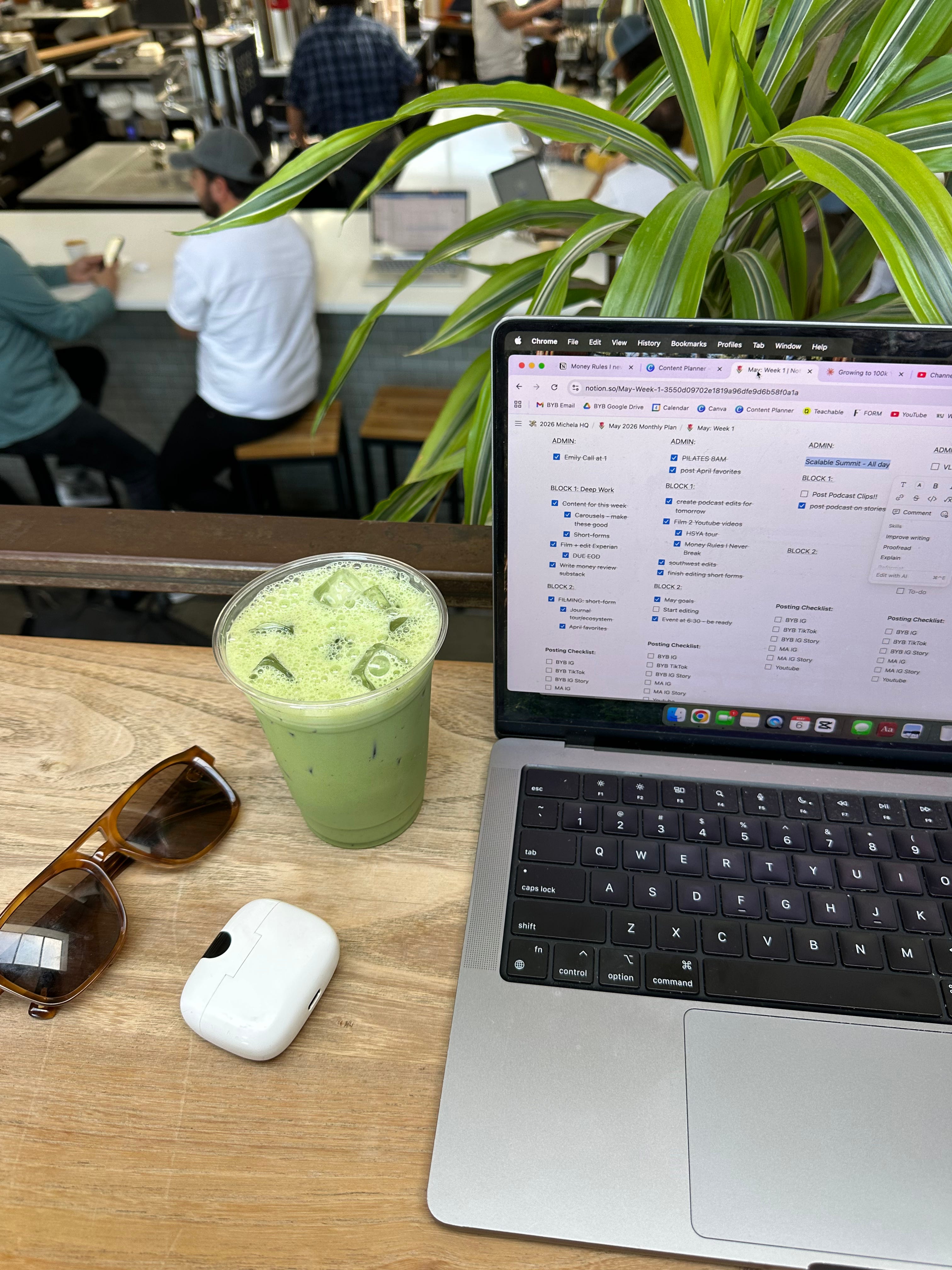
I aim for two two-hour blocks per day, scheduled in Notion with defined output for each one. Not “work on podcast;” instead, “write the outline, finish the script, record.” Specific tasks grouped by type so I’m not context-switching. My phone is completely out of the room. It’s not face down on my desk, or bricked in my pocket; it is OUT of the room. Because if I can see it, or I know it’s nearby, I’ll grab it, even with every good intention not to. The friction of having to physically get up and walk to another room is usually enough to stop the impulse.
Then, before each session I write down exactly what I’m going to accomplish. This came directly from the Austin retreat; saying it out loud to the group before each block created a completely different relationship to the work. When you can’t do that in practice, writing it down does a version of the same thing. It makes the session concrete before it starts, which drops the resistance to beginning and increases the likelihood you’ll follow through.
Training Your Brain Back
If you want to start implementing this and you haven’t been working in focused blocks, here’s what I want you to know upfront: it’s going to feel uncomfortable. That discomfort is not a sign that something is wrong. It’s a sign that your brain has been conditioned to expect more stimulation than this, and it’s going to protest the withdrawal. This is normal.
Newport calls this boredom tolerance - the ability to sit with a task that doesn’t provide instant gratification or constant feedback, to stay with something even when it’s hard and slow and not immediately rewarding. We’ve lost this almost entirely, and getting it back requires practicing it, which means tolerating the discomfort long enough for your brain to recalibrate.
To build this muscle, start small. Two hours is a longgggggggg time if you haven’t been working this way. I recommend starting with 25 minutes - also called the Pomodoro method. One focused session, put your phone in another room, identify one specific task, and eliminate distractions. Do that consistently for a few days, then extend it five to ten minutes every few days to build the muscle slowly.
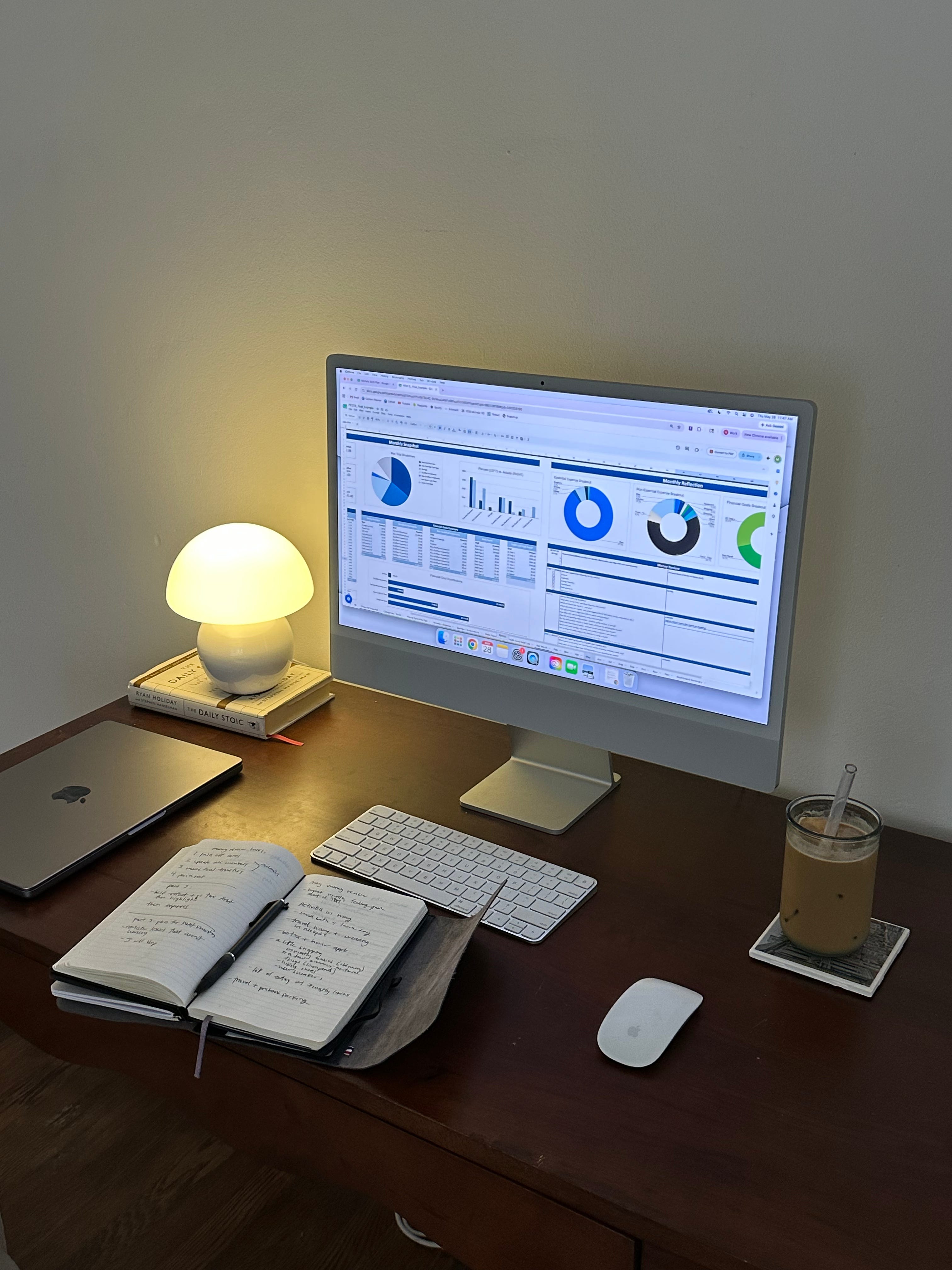
Your environment matters too. Keep your workspace clean and minimal so there’s nothing to distract you when you inevitably look up. Position your screen at eye level or slightly higher; looking down signals to your brain that you’re winding down, while looking up keeps you alert. And protect the 30 minutes before a deep work block. If you check your phone right before you sit down, you’re already fragmented before you’ve started.
Finally - and this one Newport is very clear on - you have to rest as deliberately as you work. Deep work requires cognitive recovery, and that recovery doesn’t come from switching to a different kind of stimulation.
It comes from a walk without headphones, sitting outside for ten minutes without background noise, or cooking lunch without a podcast. These are the things that actually let your brain reset so it can go back into depth.
This is something I’m actively working on because I’m a chronic overstimulator and it doesn’t come naturally to me at all. But the difference in how I feel and work when I give my brain real rest versus just switching inputs is genuinely noticeable.
The Through Line
Most of us are leaving so much potential on the table by operating in constant fragmented attention and never really asking what we could produce if we gave our best work our actual best focus.
The two-hour block, the pre-session intention, the phone completely out of the room, the deliberate rest - none of it is complicated, per se. It just requires deciding to do it and building the habit slowly enough that it actually sticks.
Start with one session. Write down what you’re going to accomplish before you begin. Put your phone somewhere that requires you to physically get up to reach it. And see what happens when you give two uninterrupted hours to something that actually matters.
xx Michela
I'm a huge fan of Cal Newport. Thanks for the reminder (I took notes!). I can't work at home, I have to be out and about near other mimicking appropriate work behavior. :o)
I also loved "Slow Productivity" by Newport.
love this & i love your minimalist notion page for the weekly tasks - do you have that available to download anywhere? or did you source it from somewhere?